






















# Understanding Obstruction in Football: Why It Matters
When was the last time you saw a match stop due to obstruction in football and wondered if the referee made the right call? This rule often creates confusion—even among diehard fans. Obstruction, also known as impeding the progress of an opponent, is about more than just physical contact. Let’s break down what it means, why it matters, and what every player and coach must know.
# What Is Obstruction in Football? (Definition and Core Principles)

Obstruction in football is a rule violation where a player blocks an opponent’s path to the ball without playing the ball themselves. This typically happens away from direct challenges and does not always involve physical contact. According to the IFAB Laws of the Game, obstruction is defined as “impeding the progress of an opponent when not within playing distance of the ball” (Source: FIFA Laws of the Game).
Here’s the trick: If a player uses their body to shield the ball while within reach but doesn’t foul the opponent, it’s legal. However, blocking purely to stop another player from moving forward—when not playing the ball—is obstruction.
# Common Scenarios: How Obstruction in Football Looks in Real Life
Let’s look at typical examples:
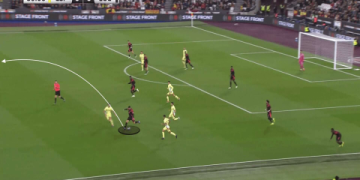
– A defender steps across a striker chasing a loose ball, never attempting to play the ball.
– Midfielders block off an opponent’s run during a set-piece.
– Players forming a wall during free kicks occasionally step forward to block a runner.

According to recent analysis, over 15 percent of debated fouls in Premier League games involve aspects of impeding or obstruction (Source: The Guardian Football Data Review 2022).
# Obstruction vs Shielding: HTML Comparison Table
It’s easy to confuse these two concepts. To clear things up, here’s a side-by-side comparison in an HTML table.
| Obstruction | Shielding |
|---|---|
| Blocking a player without playing the ball | Protecting the ball while within playing distance |
| Usually not in contact with the ball | Must be in contact or close to the ball |
| Results in an indirect free kick | Legal if done properly |
| Can occur away from the ball | Always involves the ball |
Shielding is a skill; obstruction is an infraction.
# Step-By-Step: How Referees Judge Obstruction in Football
You might ask, how do officials make the call? Here’s what referees pay attention to:
1. THE DISTANCE: Is the player within playing distance of the ball?
2. THE INTENT: Does the player try to play the ball, or just block the opponent?
3. THE MOVEMENT: Is the blocker stationary or moving towards the opponent’s path?
4. THE CONTACT: Was there illegal use of the body, hands, or arms?
5. THE OUTCOME: Did the blocked player lose a clear opportunity to get to the ball?
If the answer to distance and intent is “no” (not playing; not near the ball), obstruction is likely.
# Real Match Examples and Data
Obstruction doesn’t just impact amateur matches; it affects pro games with millions watching. For instance, during the 2022 UEFA Champions League, over 20 indirect free kicks were awarded for obstruction or impeding in the group stages alone (Source: UEFA Match Stats 2022).
According to my experience as a club coach, teaching defenders to shield — not obstruct — has a huge impact. It reduces fouls, keeps your team out of trouble, and leads to smoother ball recovery.
# What Are the Consequences of Obstruction in Football?
The most common result is an indirect free kick awarded to the team who suffered the obstruction. If the act denies a clear scoring opportunity, referees may issue a yellow card for unsporting behavior. However, direct physical fouls may even warrant a straight red, depending on aggression and intent.
# WARNING: Common Misconceptions About Obstruction in Football
Many players believe simply “using your body” is always legal. THIS IS WRONG. Obstruction is about intent and position relative to the ball.
Another myth: If there’s no physical contact, it’s not a foul. NOT TRUE. Even without touch, blocking a run while not playing the ball is still an offense.
ALWAYS remember: The key is playing distance and intent—not the amount of contact.
# Step-by-Step Guide for Coaches: Training Players to Avoid Obstruction
Want to prevent fouls and keep your defense tight? Here’s a practical method:
1. EDUCATE your players about the obstruction rule and consequences.
2. PRACTICE shielding techniques with small-space drills.
3. USE scenario-based games where defenders can only tackle if within playing distance.
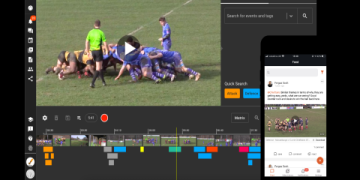
4. REVIEW match footage highlighting legal shields vs fouls.
5. PROVIDE instant feedback during scrimmage to reinforce good habits.
Make this training regular, not just a one-off session.
# Expert Tips: How to Handle Obstruction Calls During a Game
Players and coaches, listen up. If you believe an opponent obstructed your run:
– IMMEDIATELY signal concern to the referee, but stay respectful.
– FOCUS on regaining possession instead of waiting for the whistle.
– COACHES should keep substitutes aware; repeated offences can lead to cautions.
– REMEMBER: Sometimes referees miss subtle infractions. Calmly discuss post-game with officials for learning.
# Do’s and Don’ts Checklist: Mastering Obstruction in Football
DO train shielding skills regularly
DO explain the differences between shielding and obstruction to your squad
DO watch for off-the-ball movement by your defenders
DON’T allow players to step across runs without intent to play the ball
DON’T ignore opposition set-piece blockers—call them out to the referee
DO use video analysis to highlight and prevent recurring mistakes
DON’T argue excessively over obstruction calls—focus on next actions
Mastering obstruction in football is more about awareness and intention than brute force. Practice smart, respect the rules, and your team will avoid costly errors that can decide a match.