























# Introduction
When people think about football, the World Cup usually steals the spotlight. But football in Olympics history reveals a world of drama, surprise, and controversy that even diehard fans often overlook. That’s right—Olympic football has shaped legendary careers, national pride, and unforgettable moments since its inception. So, if you’re curious about how the beautiful game evolved on this global stage, you’re in the right place. Let’s uncover the secrets, upsets, and milestones of Olympic football, and see why its story is more remarkable than you might imagine.
# The Origins and Evolution of Football in the Olympics

Football’s Olympic journey began at the dawn of the 20th century. The very first official Olympic football tournament was held in 1900 in Paris. Back then, only three teams participated—and believe it or not, Club Francais (representing France) ended up taking home the gold.
Over time, Olympic football grew bigger and more complex. For years, only amateur players could participate. This rule led to national squads from Eastern Bloc countries, who fielded state-sponsored athletes, absolutely dominating. For example, Hungary won three gold medals between 1952 and 1968. However, after the 1984 Los Angeles Games, the definition of “amateur” became hotly debated, paving the way for today’s under-23 (with a few overage stars allowed) format.
# Key Turning Points: Open Era and Top Stars Stepping In
One of the most significant shifts in football in Olympics history happened in 1992. From then on, the men’s tournament adopted the under-23 rule, allowing three overage players per team. This change aimed to distinguish the Olympics from FIFA’s World Cup, while still offering exciting competition.
Since then, we’ve witnessed emerging stars announce their arrival on the world stage—take Lionel Messi’s dazzling gold with Argentina in 2008 as an example. Also, the likes of Neymar (2016) and Carlos Tevez (2004) have used the Olympics as springboards for both personal and national glory.
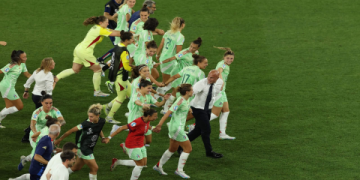
Interestingly, women’s football was added to the Olympics only in 1996. With no age limit, it quickly became a critical showcase for the sport’s best! The United States, for instance, grabbed four out of six golds through sheer consistency and depth (来源: [Olympic.org]).
# Olympic Football vs World Cup: What Sets Them Apart?

Want a quick side-by-side? Here you go—
| Aspect | Olympic Football | FIFA World Cup |
|---|---|---|
| Player Eligibility (Men) | Mostly under-23, 3 overage allowed | No age limit |
| Prestige | Often seen as secondary (men), major for women | Ultimate football prize |
| Frequency | Every 4 years | Every 4 years |
| Women’s Rules | No age restriction | No age restriction |
| First Men’s Edition | 1900 | 1930 |
While both events are quadrennial and spark worldwide excitement, the Olympic format focuses more on youth development—especially in men’s tournaments. However, in countries where football isn’t the national sport, Olympic medals can carry immense sentimental value.
# Most Memorable Moments in Olympic Football
Let’s talk about surprise upsets, underdog stories, and record-breakers—because football in Olympics history is loaded with them.
In 1996, Nigeria’s men stunned the world by beating Brazil and Argentina en route to the gold medal. That dramatic tournament changed how African football was perceived globally. In 2012, Mexico’s youthful squad shocked favorites Brazil for their first ever gold.
On the women’s side, the USA’s epic comeback against Brazil in 2008 (winning 1-0 after extra time) is still discussed today. The level of competitiveness and intensity in women’s Olympic finals has rivaled the most exhilarating World Cup matches.
From a records perspective, Hungary tops the medal table for men, while the USA rules on the women’s side (来源: [FIFA.com]). No other competition has this curious mix of youthful ambition and historical weight.
# How to Follow Olympic Football Like a Pro: Step-by-Step Guide
If you want to truly appreciate football in Olympics history, here’s my five-step action plan:
1. DO YOUR HOMEWORK: Research the group stage teams, paying special attention to rising stars and headline overage players.
2. MARK KEY DATES: Block out the semi-finals and finals in your calendar—these matches are almost always unpredictable!
3. STUDY HISTORICAL PATTERNS: Look for trends, like which regions tend to dominate and when (Eastern Europe in the past, Africa and South America more recently).
4. ENGAGE ONLINE: Join fan forums or social media discussions. They often unearth behind-the-scenes details and emotional storylines.
5. WATCH WOMEN’S TOURNAMENTS: Make sure to catch the women’s matches. In my experience, they’re often thrilling and showcase the sport’s future legends.
# Common Pitfalls and Misconceptions
WARNING: Many fans assume that an Olympic medal in football is less meaningful—it’s not always true! For many players and nations, particularly those outside the traditional football elite, Olympic gold is deeply cherished. Also, don’t make the mistake of seeing the men’s and women’s tournaments as equal in structure; only the men’s has an age limit.
Another mistake? Underestimating the level of competition. Despite the under-23 rule, the Olympics can provide career-defining moments. Several future Ballon d’Or winners first lit up the Olympics before conquering the World Cup or Europe’s major leagues.
# Checklist: Become an Olympic Football Superfan
– Follow both men’s and women’s tournaments—many stars play here before turning global legends.
– Research the rules each cycle: Player eligibility formats sometimes change.
– Bookmark official sources for stats and schedules, such as FIFA and the Olympics website.
– Analyze past upsets and medalists to spot new trends in world football.
– Participate in online football communities to stay updated with breaking news and insightful fan analysis.
# Conclusion
Football in Olympics history provides a vivid journey through dramatic changes, heart-stopping moments, and pivotal careers. Whether you care about underdog upsets, women’s empowerment in sport, or the march of history itself, this tournament offers something for every football fan. Dive in the next time the Games are on and see for yourself: sometimes, Olympic glory can rival even the World Cup’s magic.